Treat this as a shortlist, not a race. Pick places that sit naturally together, check current entry arrangements, and keep enough time for the neighbourhood around each stop.
1. Gateway of India
The arch that everyone photographs, and the obvious place to start. Built in 1924 to mark the landing point for British dignitaries arriving by sea, it now sits on the Colaba waterfront looking out over the harbour. The Indo-Saracenic stone arch is 26 metres tall and genuinely impressive up close.
The plaza around it is always busy: families, photographers, balloon sellers, and touts offering boat rides. From the jetty here you catch the ferry to Elephanta Caves. The Taj Mahal Palace hotel stands right behind it, a landmark in its own right. Come at sunrise for soft light and an almost empty plaza, or at dusk when the whole area lights up. Free to visit, open all hours, though it's at its best early morning before the crowds build.
When: Open 24 hours (best early morning) · Entry: Free
2. Marine Drive
A 3.6 km curve of promenade along the Arabian Sea, lined with Art Deco buildings, and the closest thing Mumbai has to a collective living room. At night the streetlights trace the curve of the bay, which is why it's called the Queen's Necklace.
This is where the whole city comes to sit. Couples, joggers, students, families, office workers eating bhel puri from a paper cone, all of them on the sea wall watching the water. Sunset here is a genuine event. The Art Deco buildings facing the sea form a UNESCO-recognised ensemble, the second-largest collection of Art Deco architecture in the world after Miami. Walk the full stretch from Nariman Point to Chowpatty, ideally in the evening. Completely free, and one of the most authentically Mumbai things you can do.
When: Open 24 hours (best at sunset) · Entry: Free
3. Chhatrapati Shivaji Maharaj Terminus (CST)
A working railway station and a UNESCO World Heritage Site at the same time. Built in 1887 and originally called Victoria Terminus, it's an extraordinary piece of Victorian Gothic architecture crossed with Indian elements: turrets, pointed arches, gargoyles, and a great central dome topped by a statue representing Progress.
The building handles a staggering number of commuters every day, so you're watching a piece of heritage do its actual job. The exterior is free to admire and photograph any time, and it's especially striking when lit up at night. Heritage tours of the interior run on certain days through the railway authorities. Stand across the road to take in the full facade. Free to view from outside.
When: Exterior viewable 24 hours; interior heritage tours on select days · Entry: Free (exterior); heritage tour charges apply
4. Elephanta Caves
An island an hour's ferry ride from the Gateway of India, home to rock-cut cave temples dating back to between the 5th and 8th centuries. The caves are dedicated mainly to Shiva, and the centrepiece is the Trimurti, a six-metre sculpture of a three-faced Shiva carved into the rock. It's one of the great works of Indian sculpture and worth the trip on its own.
The island is a UNESCO World Heritage Site. Ferries leave from the Gateway jetty through the day. Be warned the monkeys on the island are aggressive about food, so keep snacks hidden. There's a small toy train from the jetty to the base of the steps, then a climb up to the caves lined with stalls. The caves are closed on Mondays. Allow most of a day for the round trip.
When: 9:30 AM - 5:30 PM, closed Mondays (ferries from Gateway of India) · Entry: ₹40 for Indians, ₹600 for foreigners (plus ferry ₹200-260 round trip)
5. Haji Ali Dargah
A mosque and tomb sitting on a small islet off the Worli coast, connected to the mainland by a narrow causeway that's only walkable at low tide. At high tide the whole structure appears to float on the Arabian Sea, which is the image you've probably seen.
Built in 1431 in memory of the Sufi saint Pir Haji Ali Shah Bukhari, it draws people of all faiths. The walk along the causeway, lined with stalls and beggars, is part of the experience, and the white domes against the sea are striking. Dress modestly, cover your head if you're a woman, and check the tide times before you go or you'll be wading. Free to enter, open most of the day with prayer breaks.
When: 5:30 AM - 10:00 PM (causeway accessible at low tide only) · Entry: Free
6. Chhatrapati Shivaji Maharaj Vastu Sangrahalaya
Mumbai's main museum, still widely known by its old name, the Prince of Wales Museum. The building itself is a fine piece of Indo-Saracenic architecture set in palm-fringed gardens in the Fort district. Inside, the collection spans Indian sculpture, Mughal miniatures, decorative arts, natural history, and a strong set of artefacts from across the subcontinent.
It's well curated by Indian museum standards, air-conditioned, and a genuinely good way to spend a hot afternoon. Allow two to three hours. There's an audio guide available, and the museum shop is decent. A short walk from the Gateway of India and the Kala Ghoda art district, so it slots easily into a South Mumbai day.
When: 10:15 AM - 6:00 PM (daily) · Entry: Around ₹150 for Indians, ₹700 for foreigners (camera charges extra)
7. Siddhivinayak Temple
One of the most visited temples in the country, dedicated to Lord Ganesha. It's relatively small but the devotion around it is enormous, drawing everyone from ordinary devotees to Bollywood stars and cricketers, especially on Tuesdays when the queues stretch for hours.
The inner sanctum holds a black stone Ganesha idol, and the temple is famous for being a place people come to before big life events. If you want to experience the intensity of Mumbai's religious life, this is the place, but go early to avoid the worst of the crowds. Tuesdays are the busiest by far. Free to enter, though there are paid fast-track darshan options. Dress modestly.
When: 5:30 AM - 10:00 PM (Tuesdays extremely crowded) · Entry: Free
8. Sanjay Gandhi National Park & Kanheri Caves
A genuine national park inside the city limits, which is rare for a metropolis this size. Over 100 square kilometres of protected forest in the northern suburbs, with leopards living wild inside it, walking trails, a lion and tiger safari, and a small toy train.
The highlight for many is the Kanheri Caves, a complex of over 100 Buddhist rock-cut caves carved between the 1st century BCE and the 10th century CE, used as monasteries and prayer halls. It's a peaceful, green escape from the density of the city, and a reminder of how old human settlement here really is. Closed Mondays. Go early in the day, both for the heat and the wildlife.
When: 7:30 AM - 6:00 PM, closed Mondays · Entry: Around ₹85 park entry; Kanheri Caves ₹25 Indians, ₹300 foreigners
9. Juhu Beach
Mumbai's most famous beach, in the northern suburbs near the bungalows of many Bollywood stars. Nobody comes here to swim, the water isn't clean enough, but the beach is a social institution. In the evenings it fills with families, couples, horse rides, toy sellers, and a long line of food stalls.
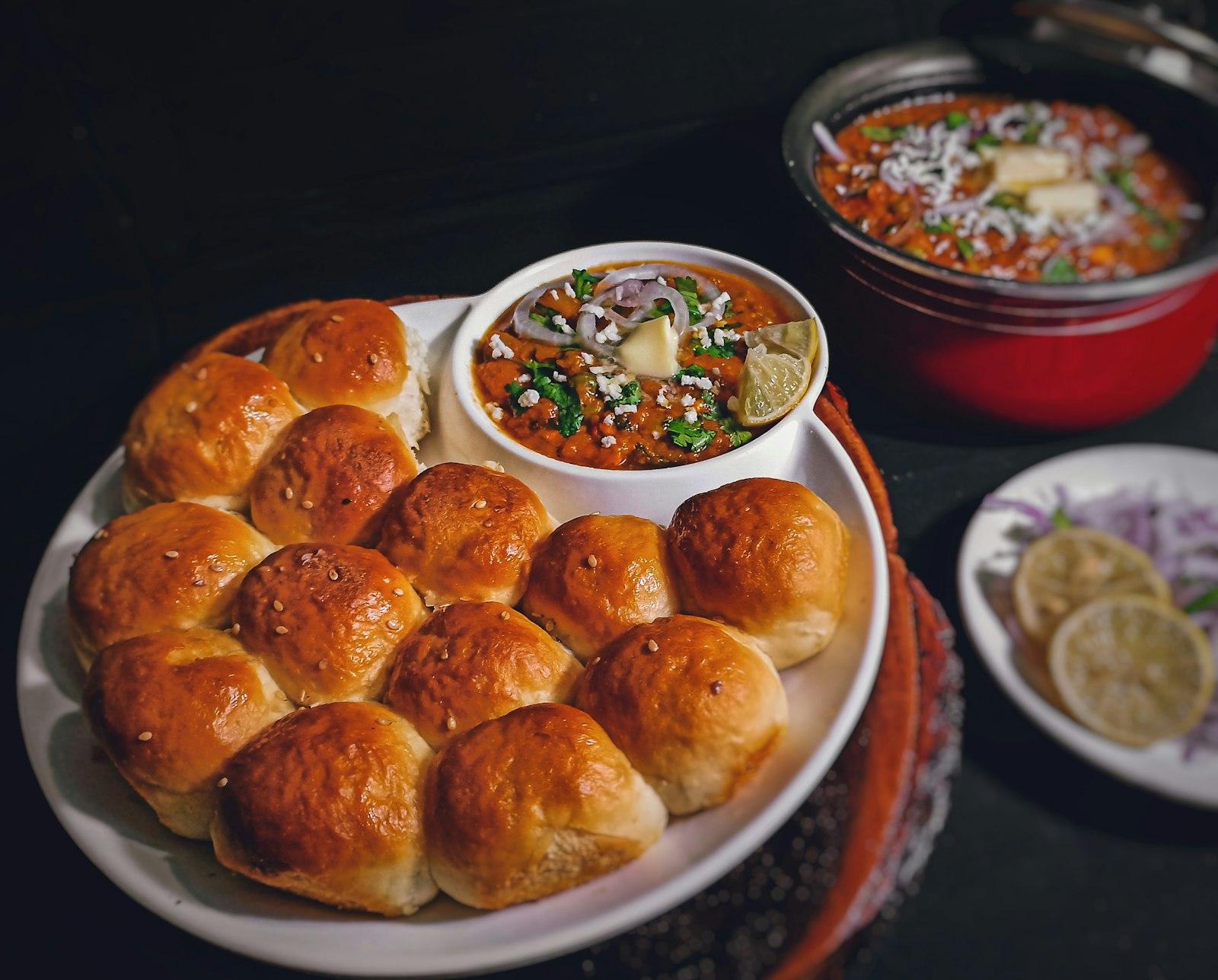
The food is the real reason to come: pav bhaji, bhel puri, sev puri, pani puri, ragda pattice, and kulfi, all cooked fresh in front of you. Watch the sunset, eat your way along the stalls, and people-watch. It's busiest and best on weekend evenings. Amitabh Bachchan's bungalow is nearby, and fans gather outside it. Free, open all hours, at its best around sunset.
When: Open 24 hours (best at sunset) · Entry: Free
10. Bandra Fort & Bandstand
Bandra is the cool, creative suburb of Mumbai, and its seafront is where to feel that. The Bandstand promenade runs along the Arabian Sea, lined with benches, walkers, and couples, with the Bandra-Worli Sea Link stretching across the water in the distance, especially beautiful lit up at night.
At one end sits Bandra Fort (Castella de Aguada), a small Portuguese-era watchtower from 1640 with good views over the sea link and the bay. Shah Rukh Khan's house, Mannat, is nearby and constantly surrounded by fans. The whole area has a relaxed, artistic feel, with street art, cafes, and old Catholic cottages in the lanes behind. Free, open all hours, lovely at sunset and after dark.
When: Open 24 hours (best at sunset and after dark) · Entry: Free